Searching for courses...
0%

Postgraduate Certificate Risk Management Certification (RMC) for Underground Infrastructure Assessment (UIA) Professionals

The Risk Management Certification (RMC) for Underground Infrastructure Assessment (UIA) Professionals is a comprehensive course designed to equip UIA professionals with the knowledge and skills to manage risks associated with underground infrastructure. This course is ideal for UIA professionals, engineers, and managers who want to enhance their skills in risk management. The course is unique in its focus on practical, real-world applications and provides key benefits for participants, including improved risk management skills, enhanced career prospects, and increased industry recognition.

Last Updated: September 1, 2026

Independent workplace certificate for practical training

What you'll learn

Perform life-saving first aid techniques in emergency situations
Master CPR and AED procedures following current guidelines
Implement effective injury prevention strategies in the workplace
Coordinate emergency medical response for workplace incidents
Enrollment
Start Anytime
Duration
1 Month, extend up to 6
Study Mode
Online
Learning Hours
3-4 hours/week

Skills Gained

Management Skills Certification Risk Assessment Team Leadership Delegation

Course Overview

Risk Management Certification (RMC) for Underground Infrastructure Assessment (UIA) Professionals Course Overview
The Risk Management Certification (RMC) for Underground Infrastructure Assessment (UIA) Professionals is a comprehensive course designed to equip UIA professionals with the knowledge and skills to manage risks associated with underground infrastructure. This course is ideal for UIA professionals, engineers, and managers who want to enhance their skills in risk management. The course is unique in its focus on practical, real-world applications and provides key benefits for participants, including improved risk management skills, enhanced career prospects, and increased industry recognition. This comprehensive course provides in-depth knowledge and practical skills in Risk Management Certification (RMC) for Underground Infrastructure Assessment (UIA) Professionals. It is designed to equip professionals with the expertise needed to excel in their field. Participants will benefit from a structured learning approach that combines theoretical knowledge with real-world applications, ensuring they can immediately apply what they learn in their workplace.

Key Benefits

Comprehensive, industry-recognized certification that enhances your professional credentials

Self-paced online learning with 24/7 access to course materials for maximum flexibility

Practical knowledge and skills that can be immediately applied in your workplace

Prerequisites

This course is open to all, with no formal entry requirements. Anyone with a genuine interest in the subject is encouraged to apply.

Who Should Attend

This course is designed for individuals looking to enhance their knowledge and skills in this subject area, including professionals seeking career advancement and newcomers to the field.

Course Content

Module 1: Introduction to Risk Management

This module provides an introduction to the principles of risk management, including the definition of risk, the risk management process, and the importance of risk management in the UIA industry.

Key Topics Covered:

• Introduction to risk management
• Risk management process
• Importance of risk management in UIA
• Risk management standards and regulations
• Industry best practices in risk management

Module 2: Risk Assessment and Analysis

This module covers the principles of risk assessment and analysis, including hazard identification, risk evaluation, and risk prioritization.

This module provides you with practical frameworks and methodologies for conducting thorough risk assessments in various workplace settings. You'll learn evidence-based approaches to identify, evaluate, and prioritize potential hazards.

Effective risk assessment has been shown to reduce workplace injuries by up to 70% when implemented correctly, making this a critical skill for safety professionals.

Key Topics Covered:

• Hazard identification and risk evaluation
• Risk assessment methodologies
• Risk prioritization and ranking
• Risk assessment tools and techniques
• Case studies in risk assessment and analysis

Module 3: Risk Mitigation and Control

This module covers the principles of risk mitigation and control, including risk reduction, risk transfer, and risk acceptance.

Key Topics Covered:

• Risk reduction and control measures
• Risk transfer and insurance
• Risk acceptance and residual risk
• Risk mitigation and control strategies
• Case studies in risk mitigation and control

Module 4: Communication and Stakeholder Management

This module covers the importance of communication and stakeholder management in risk management, including stakeholder identification, communication planning, and crisis communication.

Key Topics Covered:

• Stakeholder identification and analysis
• Communication planning and strategy
• Crisis communication and management
• Stakeholder engagement and participation
• Case studies in communication and stakeholder management

Module 5: Industry Best Practices and Standards

This module covers industry best practices and standards in risk management, including ISO 31000, ISO 9001, and other relevant standards and guidelines.

Key Topics Covered:

• Introduction to industry best practices and standards
• ISO 31000 and risk management
• ISO 9001 and quality management
• Other relevant standards and guidelines
• Case studies in industry best practices and standards

Module 6: Risk Management Systems and Processes

This module covers the design and implementation of risk management systems and processes, including risk management frameworks, risk management plans, and risk management procedures.

Key Topics Covered:

• Risk management frameworks and models
• Risk management plans and procedures
• Risk management systems and processes
• Risk management metrics and performance indicators
• Case studies in risk management systems and processes

Module 7: Audit and Review

This module covers the principles of audit and review in risk management, including audit planning, audit execution, and audit reporting.

Key Topics Covered:

• Introduction to audit and review
• Audit planning and preparation
• Audit execution and fieldwork
• Audit reporting and follow-up
• Case studies in audit and review

Module 8: Continuous Improvement and Professional Development

This module covers the importance of continuous improvement and professional development in risk management, including learning from experience, sharing knowledge and best practices, and staying up-to-date with industry developments.

Key Topics Covered:

• Introduction to continuous improvement and professional development
• Learning from experience and sharing knowledge
• Staying up-to-date with industry developments
• Professional development and career advancement
• Case studies in continuous improvement and professional development
Learning Resources

Study Materials

This programme includes comprehensive study materials designed to support your learning journey and offers maximum flexibility, allowing you to study at your own pace and at a time that suits you best.

You will have access to online podcasts with expert audio commentary.

In addition, you'll benefit from student support via automatic live chat.

Assessment Methods

Assessments for the programme are conducted online through multiple-choice questions that are carefully designed to evaluate your understanding of the course content.

These assessments are time-bound, encouraging learners to think critically and manage their time effectively while demonstrating their knowledge in a structured and efficient manner.

Career Opportunities

Overview

The RMC course provides a comprehensive education in risk management, which can lead to a wide range of career opportunities in the UIA industry. The course is designed to equip participants with the knowledge and skills to manage risks associated with underground infrastructure, which is a critical aspect of the industry. The course can also provide a platform for professional development, with opportunities for advancement and increased industry recognition.

Growth & Development

The UIA industry is growing rapidly, with increasing demand for risk management professionals who can manage risks associated with underground infrastructure. The RMC course can provide a competitive advantage in the job market, with opportunities for career advancement and increased industry recognition. The course can also provide a platform for professional development, with opportunities for further education and training.

Potential Career Paths

Risk Manager

A risk manager is responsible for identifying, assessing, and mitigating risks associated with underground infrastructure. The RMC course can provide the knowledge and skills required for this role.

Relevant Industries:
UIA Construction Infrastructure

Safety Officer

A safety officer is responsible for ensuring the safety of employees and the general public in the UIA industry. The RMC course can provide the knowledge and skills required for this role.

Relevant Industries:
UIA Construction Infrastructure

Project Manager

A project manager is responsible for managing projects in the UIA industry, including risk management and mitigation. The RMC course can provide the knowledge and skills required for this role.

Relevant Industries:
UIA Construction Infrastructure

Engineer

An engineer is responsible for designing and developing infrastructure projects, including underground infrastructure. The RMC course can provide the knowledge and skills required for this role.

Relevant Industries:
UIA Construction Infrastructure

Consultant

A consultant is responsible for providing expert advice on risk management and mitigation in the UIA industry. The RMC course can provide the knowledge and skills required for this role.

Relevant Industries:
UIA Construction Infrastructure

Additional Opportunities

The RMC course can also provide opportunities for networking and professional development, including access to industry events and conferences, as well as opportunities for further education and training. The course can also provide a platform for career advancement, with opportunities for increased industry recognition and career advancement.

Key Benefits of This Career Path

  • High demand across multiple industries
  • Competitive salary and benefits
  • Opportunities for career advancement
  • Make a meaningful impact on workplace safety

What Our Students Say

Rahul Patel 🇮🇳

Senior Infrastructure Engineer

"The RMC course has been instrumental in helping me develop a comprehensive risk management framework for our underground infrastructure projects, enabling me to better identify and mitigate potential risks. I can now confidently assess and prioritize risks to ensure the safety and reliability of our infrastructure."

Maria Rodriguez 🇲🇽

UIA Team Lead

"This course has provided me with the knowledge and skills to effectively manage risks associated with underground infrastructure, particularly in terms of asset degradation and failure, which has been a major concern for our team."

Ling Wong 🇨🇳

Geotechnical Engineer

"The RMC course has enhanced my understanding of risk management principles and their application to underground infrastructure assessment, allowing me to develop more accurate and reliable risk models for our tunnel and pipeline projects."

Kofi Owusu 🇬🇭

Infrastructure Manager

"The course has equipped me with the skills to conduct thorough risk assessments and develop effective mitigation strategies for our underground infrastructure assets, which has significantly improved our ability to manage and maintain our infrastructure network."

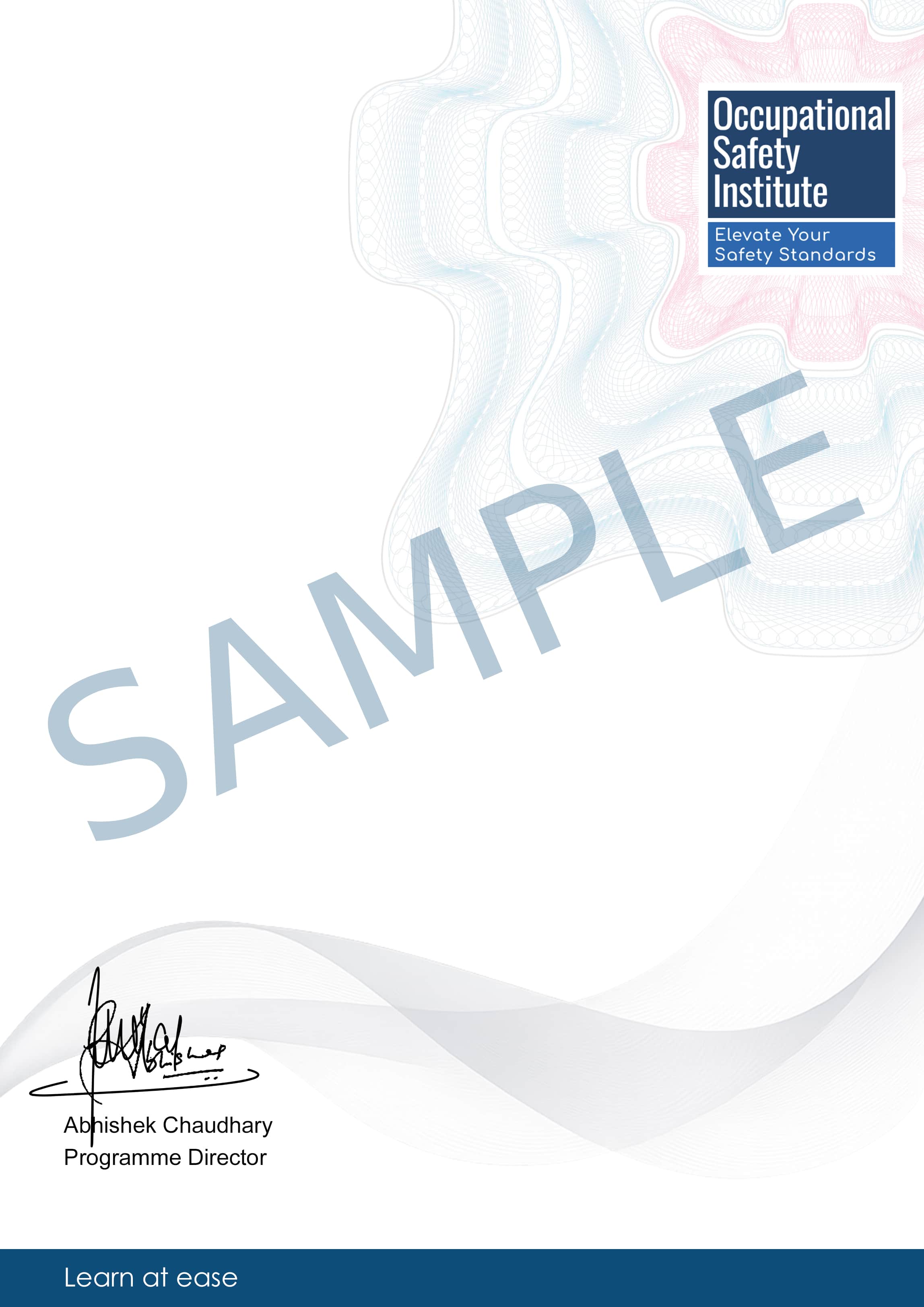
Sample Certificate

Upon successful completion of this course, you will receive a certificate similar to the one shown below:

Certificate Background

Postgraduate Certificate Risk Management Certification (RMC) for Underground Infrastructure Assessment (UIA) Professionals

is awarded to

Student Name

Awarded: November 2026

Blockchain ID: 111111111111-eeeeee-2ddddddd-00000

Frequently Asked Questions

No specific prior qualifications are required. However, basic literacy and numeracy skills are essential for successful completion of the course.

The course is self-paced and flexible. Most learners complete it within 1 to 2 months by dedicating 4 to 6 hours per week.

This course is not accredited by a recognised awarding body and is not regulated by an official institution. It is designed for personal and professional development and is not intended to replace or serve as an equivalent to a formal degree or diploma.

This fully online programme includes comprehensive study materials and a range of support options to enhance your learning experience: - Online quizzes (multiple choice questions) - Audio podcasts (expert commentary) - Live student support via chat The course offers maximum flexibility, allowing you to study at your own pace, on your own schedule.

Yes, the course is delivered entirely online with 24/7 access to learning materials. You can study at your convenience from any device with an internet connection.

You might also be interested in

More in this topic: Browse the topic hub

Disclaimer: This certificate is not intended to replace or serve as an equivalent to obtaining a formal degree or diploma. This programme is structured for professional enrichment and is offered independently of any formal accreditation framework.

33% OFF

Complete Course Package

$299
$199.99
one-time payment

🔥 LIMITED TIME OFFER ENDS IN:

0
Days
:
0
Hrs
:
0
Min
:
0
Sec

What's Included:

Comprehensive course materials
Digital Certificate
No Exams, Just Online Quizzes
24/7 automated self-service support

Request Course Info

7-Day Money-Back Guarantee

📚 More on This Course

What are the career benefits of Risk Management Certification for Underground Infrastructure Assessment professionals? +
If you are responsible for what are the career benefits of Risk Management Certification for Underground Infrastructure Assessment professionals?, this note walks through what matters on the ground—without the filler. … Read full answer →
New
Professional Certificate in Workplace Safety Management